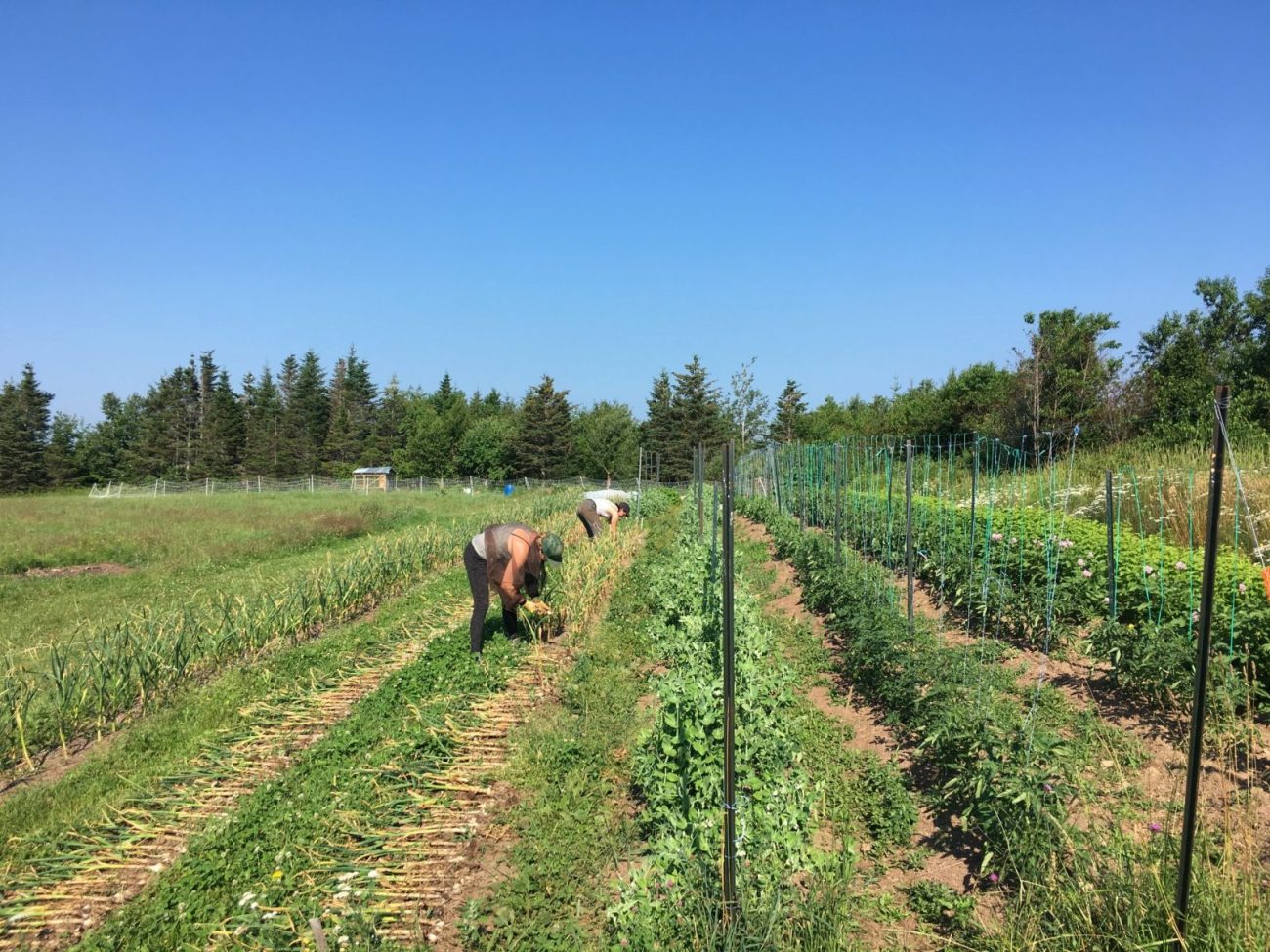
Module Goal: To explore the convergence of decentralized food systems, renewable energy, and relational governance in Cape Breton-Unama’ki.
1. Thematic Overview
This module explores how Cape Breton is building a resilient food “patchwork” by connecting Indigenous sovereignty, social enterprise, and circular agriculture. Rather than a centralized food hub, the region relies on a decentralized network where energy independence (solar/geothermal) and social logistics (e-bikes/reclaimed food) ensure that the most vulnerable populations remain fed during climate-induced supply chain disruptions.
2. Context & Rationale (The “Why”)
Cape Breton’s food system is highly vulnerable due to its geographic isolation and a heavy reliance on a single transportation artery (the Canso Causeway). With aging demographics and rising energy poverty, food security is no longer just an agricultural issue, it is a social and economic crisis. By integrating these four initiatives, we see a model that addresses food access through the lens of total regional resilience.
3. Detailed Adaptation Approaches (The “How”)
- Relational Governance (IFN): The Island Food Network provides the strategic “scaffolding”. It coordinates among five Mi’kmaw bands and five municipalities to ensure that disparate projects share resources and knowledge rather than compete for them.
- Indigenous Technological Sovereignty (Potlotek): By using geothermal energy to heat greenhouses, Potlotek First Nation removes the fossil-fuel “gatekeeper” from food production, allowing for year-round sovereignty.
- Circular Resource Loops (Big Spruce & New Dawn): Big Spruce Brewing redefines “waste” by using spent grain for livestock feed, while New Dawn’s Meals on Wheels reclaims surplus food and utilizes e-bike delivery to close the “last mile” gap with zero emissions.
- Energy-Food Nexus (Pine Tree Park): While primarily a solar garden, Pine Tree Park reduces household energy costs by up to 50%, effectively “subsidizing” the food budget of low-income residents through energy savings.
4. Notable Outcomes & Impact
- Scaling Energy Sovereignty: The success of the Pine Tree Park solar garden (555 kW) has already triggered the development of a second community site in Sydney.
- Emergency Responsiveness: New Dawn’s ability to pivot its food network to provide over $30,000 in emergency support in Louisbourg proves the agility of relational networks.
- Policy Formalization: The Shared Food Vision led by IFN has successfully integrated Netukulimk principles into regional planning documents.
5. Challenges & Strategic Barriers
- Financial Sustainability: Many of these models (particularly New Dawn and IFN) rely on volunteer labour and subsidies that are sensitive to economic shifts.
- Infrastructure Gaps: Expanding the “hub-and-spoke” model for regional kitchens requires significant capital for cold storage and provincial regulatory adjustments for shared facilities.
6. Educational Significance for the Summer Institute
This module teaches students that climate adaptation is a convergence of systems. It invites them to analyze:
- The Power of Hubs: How the New Dawn Center or a community kitchen acts as a “meet-up hub” for decentralized efforts.
- Scaffolding without Steering: How the IFN supports local projects (the scaffolding) without imposing a rigid, top-down hierarchy (the steering).
