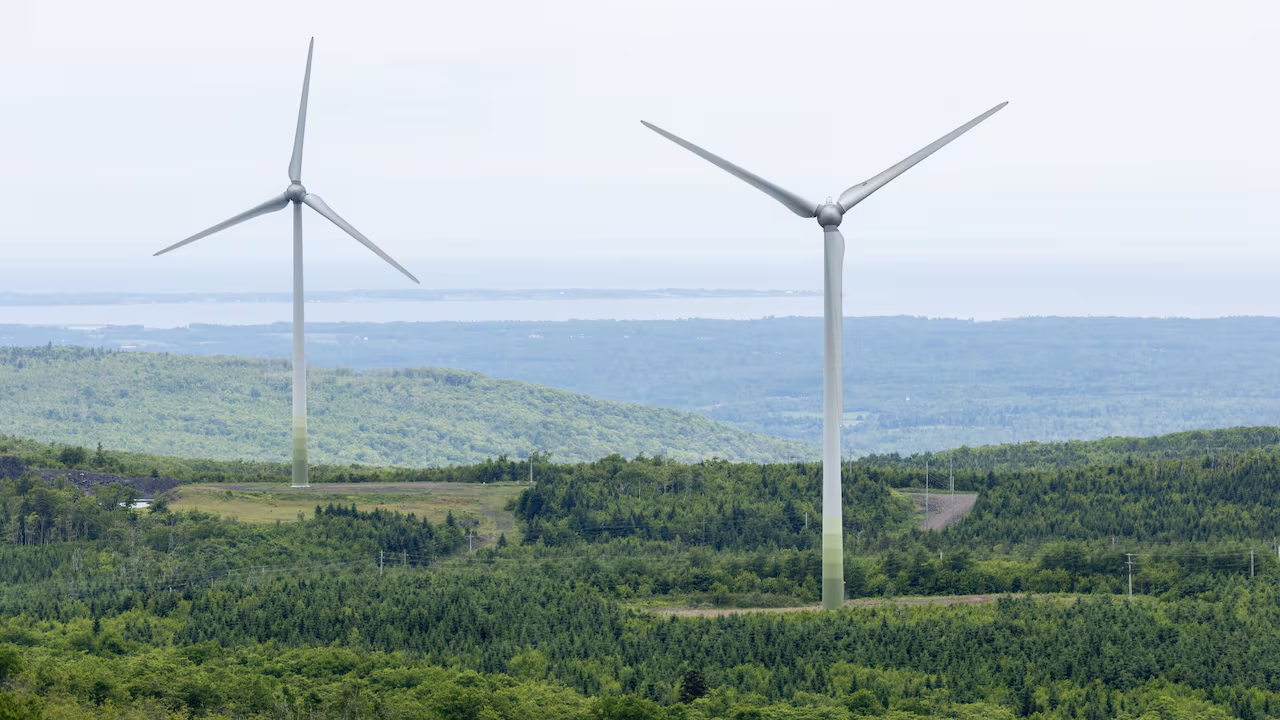
Research Focus: A wind-centred Community Economic Development (CED) approach evaluating offshore wind energy and community-scale onshore wind with battery storage as pathways for Cape Breton’s (Unama’ki) clean energy transition.
1. The Core Strategic Challenge
Cape Breton is navigating a major structural economic and energy shift as Nova Scotia moves away from historical reliance on coal-fired electricity toward provincial clean power targets. While renewable energy development is frequently presented as an unquestioned economic cure, this research emphasizes that renewable growth is not automatically sustainable. Without deliberate local planning, large energy projects risk reproducing an extractive development model, where external developers capture profits while local communities carry visual, environmental, and infrastructure burdens.
2. Socioeconomic Context (Census Baseline)
To ground energy policy in local realities, the project incorporates demographic and economic data for the Cape Breton Regional Municipality (CBRM) from the 2021 Census of Population:
| Socioeconomic Metric | CBRM Value | Strategic Relevance for Energy Transition |
| Total Population (2021) | 93,694 | Reflects a small population base and localized labour pool. |
| Population Growth (2016–2021) | -0.6% | Highlights ongoing demographic decline and the need for regional youth retention. |
| Employment Rate | 41.7% | Demonstrates lower overall labour participation compared to major urban hubs. |
| Unemployment Rate | 19.5% | Underlines the need for genuine local job creation and workforce retraining. |
| Median Household Income (2020) | $62,400 | Means ratepayer protection and energy affordability must remain core priorities. |
| Average Monthly Shelter Costs | $891 (Owners) / $827 (Renters) | Indicates that energy rate hikes interact directly with broader cost-of-living constraints. |
3. Comparative Pathway Analysis
The study evaluates two primary wind-centred pathways using a comparative CED matrix:
| Dimension / Framework | Pathway 1: Offshore Wind Energy | Pathway 2: Community-Scale Onshore Wind + Storage |
| Scale & Alignment | Large industrial scale; directly aligns with Nova Scotia’s 5 GW offshore wind leasing target by 2030. | Smaller, distributed scale; directly enhances local grid reliability and municipal/community power. |
| Asset-Based Community Development (ABCD) | Capitalizes on marine industrial heritage, deep-water ports, and coastal wind resources, but risks external corporate control. | Leverages municipal land, local institutions, Mi’kmaq community assets, and regional trade skills directly. |
| Just Transition & Labour | Generates high capital investment and supply-chain needs (fabrication, vessels), but construction jobs may be temporary. | Provides steady, manageable local employment and builds long-term technical and organizational capacity. |
| Triple Bottom Line (TBL) | Massive potential for grid decarbonization and green fuels, but carries high marine/fisheries environmental risk. | Moderate carbon offset potential with lower environmental assessment complexity and highly visible social benefits. |
| Doughnut Economics | High risk of overshooting ecological boundaries if driven solely by export growth or green hydrogen production. | Strongly aligns with the “social foundation” by directly supporting local resilience, energy security, and community revenue. |
| Netukulimk & Energy Justice | Requires formal Mi’kmaq co-governance, OCAP® data protocols, and binding community benefit agreements to be legitimate. | Adaptable to Indigenous co-ownership models, direct revenue sharing, and local stewardship protocols. |
4. Lessons from Global & Canadian Case Studies
The project tests its theoretical findings against four comparative case studies:
- Samsø (Denmark): Demonstrates that island energy transitions succeed through public education, local financial stakes, and cooperative community ownership.
- Orkney Islands (Scotland): Illustrates that island wind development requires early grid infrastructure investments and highlights how municipal wind ownership can fund public services.
- Henvey Inlet Wind (Ontario): Proves that First Nations clean energy partnerships can achieve substantial scale when structured around equity co-ownership, joint operations, and environmental stewardship regimes.
- Fosen (Norway): Serves as a critical warning case where green energy development proceeded without adequate recognition of Sámi Indigenous rights, leading to severe human rights violations and invalidation of licenses by the Norwegian Supreme Court.
5. Phased Implementation Framework
Kaiyong proposes a staged, wind-centred strategy that builds local capacity before scaling up to mega-projects: Years 1–3: Readiness & Literacy ──> Years 3–7: Local Pilots & Grid ──> Years 7–15: Offshore & Value Retention
Short-Term (Years 1–3): Building Capacity & Governance
- Cape Breton Wind Energy Transition Task Force: Establish a multi-stakeholder body (municipalities, Mi’kmaq leaders, CBU, industry, fisheries) to coordinate regional energy planning.
- Wind Readiness Assessment: Conduct a comprehensive audit of local ports, transportation links, electrical grid capacity, and supply-chain capabilities.
- Public Energy Literacy: Launch plain-language workshops and community forums to build trust, address environmental concerns, and foster procedural justice.
Medium-Term (Years 3–7): Local Ownership & Grid Readiness
- Community-Owned Onshore Wind Pilots: Develop small-scale, community- or municipally-owned wind projects with battery storage to test local revenue-sharing models.
- Grid Modernization & Battery Storage: Invest in community-level storage systems to absorb intermittent wind generation, manage peak demand, and supply emergency backup power.
- Workforce Training & Procurement Prep: Expand technical training programs at CBU, NSCC, and the Verschuren Centre for local workers and small businesses.
Long-Term (Years 7–15): Strategic Scaling & Equity
- Offshore Wind Supply-Chain Hub: Position Cape Breton’s deep-water ports as logistics, maintenance, and fabrication hubs for offshore wind deployment.
- Mandative Indigenous Equity & OCAP® Data Governance: Require minimum Mi’kmaq equity ownership, OCAP®-aligned data sovereignty agreements, and Netukulimk environmental screening for all major developments.
- Cautious Approach to Green Hydrogen: Ensure green hydrogen development prioritizes regional decarbonization and local community benefits rather than becoming an enclave export economy.
CED Conclusion
The central takeaway of this ARP is that technology alone does not deliver a just transition. Offshore wind should be treated as a conditional pathway that proceeds only after Cape Breton establishes robust local governance, Mi’kmaq equity partnerships, OCAP® data sovereignty, and supply-chain readiness. By developing community-scale wind and storage first, Cape Breton can build the local resilience and bargaining power needed to ensure that future energy projects serve the long-term well-being of Unama’ki communities.
