Islands don’t need better tourism strategies. They need power.
Here’s the uncomfortable thing I kept running into while researching island governance across three countries: almost everyone is asking the wrong question.
The question islands get asked, by consultants, by funding bodies, by their own planning departments, is some version of how do we do tourism better? How do we extend the season, manage the crowds, market the heritage, attract the investment. And those are real problems. But after synthesising the evidence from five island regions across Canada, the United States and Scotland, I’m convinced they’re downstream problems. The thing that actually determines whether an island can sustain itself isn’t its tourism strategy. It’s whether the people who live there hold genuine authority over their own land, economy and culture.
That’s the headline finding of Growing Our Own Answers, a knowledge synthesis I led with Dr. David Mallery (Scotland’s Rural College), funded by SSHRC in partnership with UK Research and Innovation. We read fifty-nine documents, master plans, economic strategies, governance agreements, constitutional texts, peer-reviewed studies, and coded more than two thousand pieces of evidence across five places. What follows is the short version of what they taught us.
Five islands, one spectrum
The cases weren’t chosen at random. Laid side by side, they form a kind of spectrum of self-governance, not a ranking of winners and losers, but a range of answers to the same question: who gets to decide?
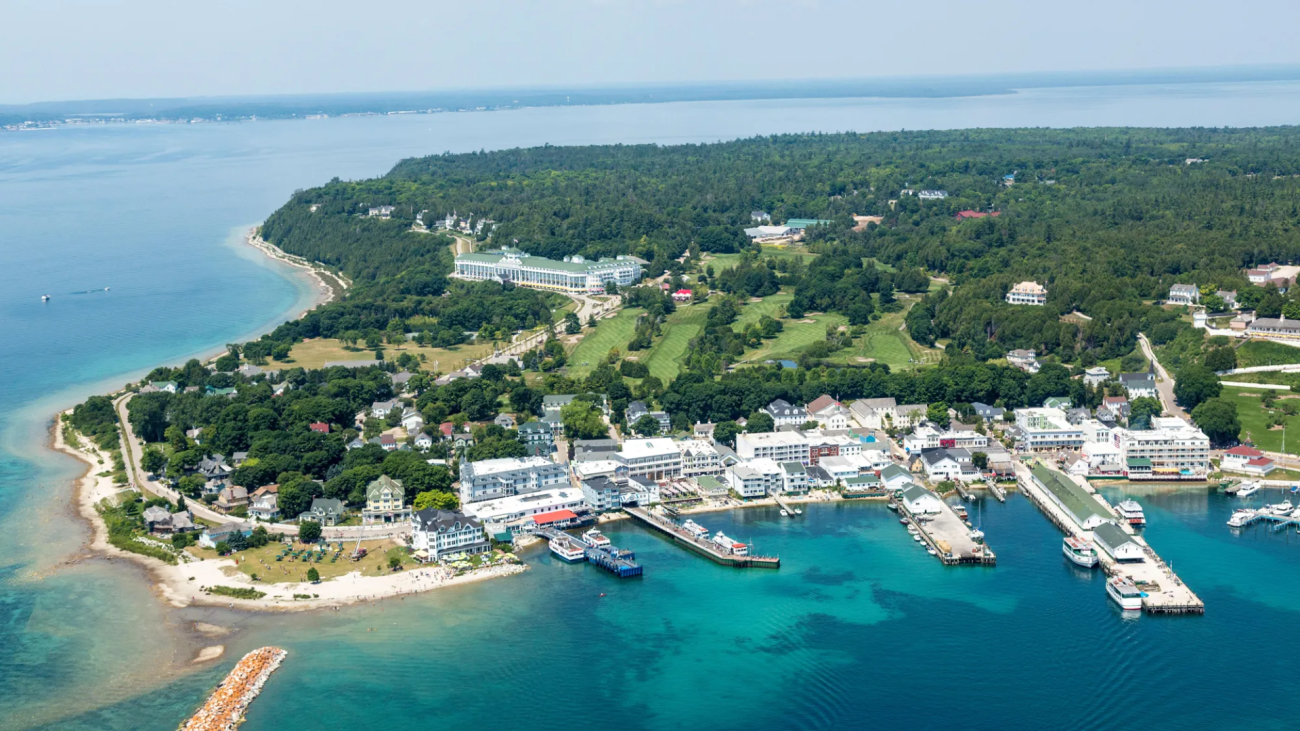
Mackinac Island
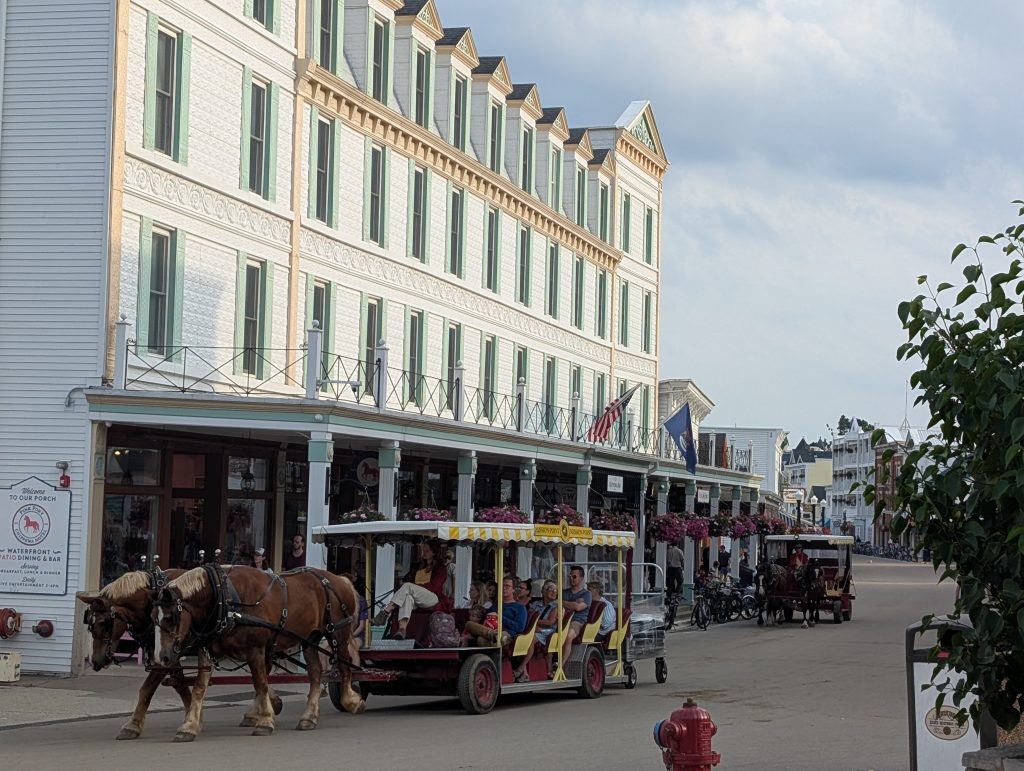
Mackinac Island, Michigan sits at one end. It is one of the most tightly governed landscapes in North America: roughly four-fifths state park, the rest blanketed in historic-district controls, the whole thing frozen in a car-free Victorian amber that draws a million visitors a year. It’s genuinely beautiful, and genuinely protected. But the evidence is blunt about the cost. Authority sits with commissions, not community. And Indigenous presence, in a region governed by Anishinaabe peoples for millennia, shows up in the contemporary record mostly as cultural interpretation, with traditional ecological knowledge explicitly treated as secondary to Western science. Mackinac is the cautionary tale of the whole study: you can protect a place beautifully and still hollow out the community’s capacity to shape it.
Fogo Island
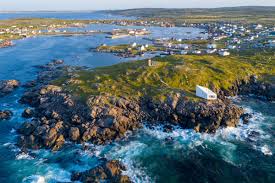
Fogo Island, Newfoundland answers differently. After the cod collapse, Fogo did something quietly radical, it kept ownership. Community-owned enterprises and the old fishing co-operative reinvest tourism revenue back into the island instead of exporting the profits. The famous Inn is just the visible tip; underneath it is a deliberate strategy of holding onto productive assets. The data shows Fogo weathered the fishery’s collapse better than its neighbours precisely because harvesting, processing and marketing were community-controlled. A community-owned processor behaves differently under stress than an absentee one. Fogo’s lesson: community wealth-building is a governance choice, not just an economic one. (Though it’s honest about the catch, heritage can become a commodity, and more tourist cars on a finite ferry squeeze out the fishery that built the place.)
Outer Hebrides and Arran
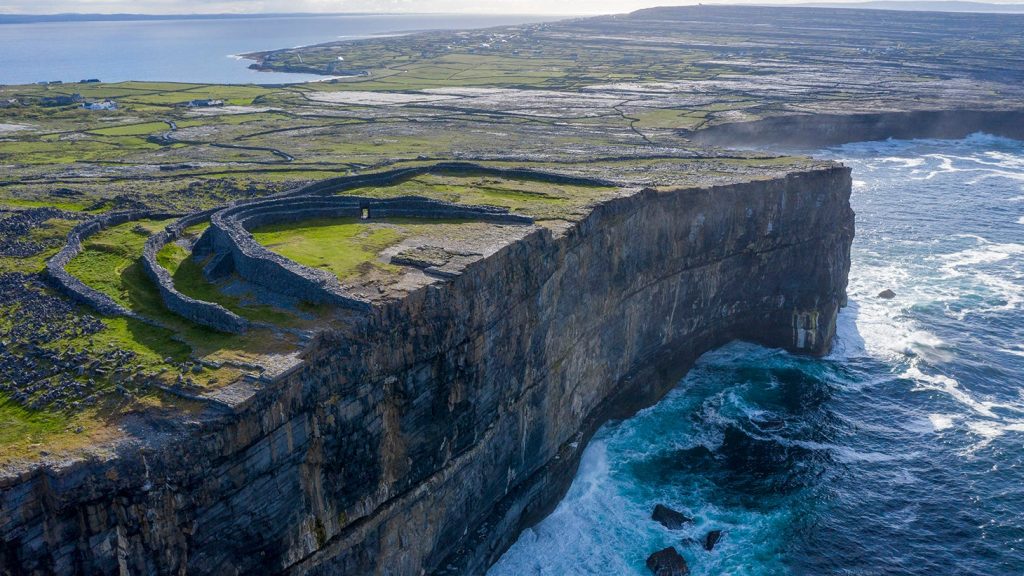
The Outer Hebrides and Arran, Scotland show what happens when you write local control into law. Scotland carries its own history of dispossession, the Highland Clearances were internal colonisation by another name, and it has responded with one of the most ambitious community land-reform programmes in Europe. Residents of West Harris voted overwhelmingly to buy their own land. Arran’s development trust took on affordable housing directly. And off Arran’s coast, the community itself initiated Lamlash Bay, Scotland’s first community-driven no-take marine reserve. Land reform and community trusts institutionalise local authority in title and legislation, the strongest structural lever in the whole comparison. The honest footnote: even that hasn’t reversed depopulation or fixed the housing market. Authority is necessary, not sufficient.
Cape Breton/Unama’ki
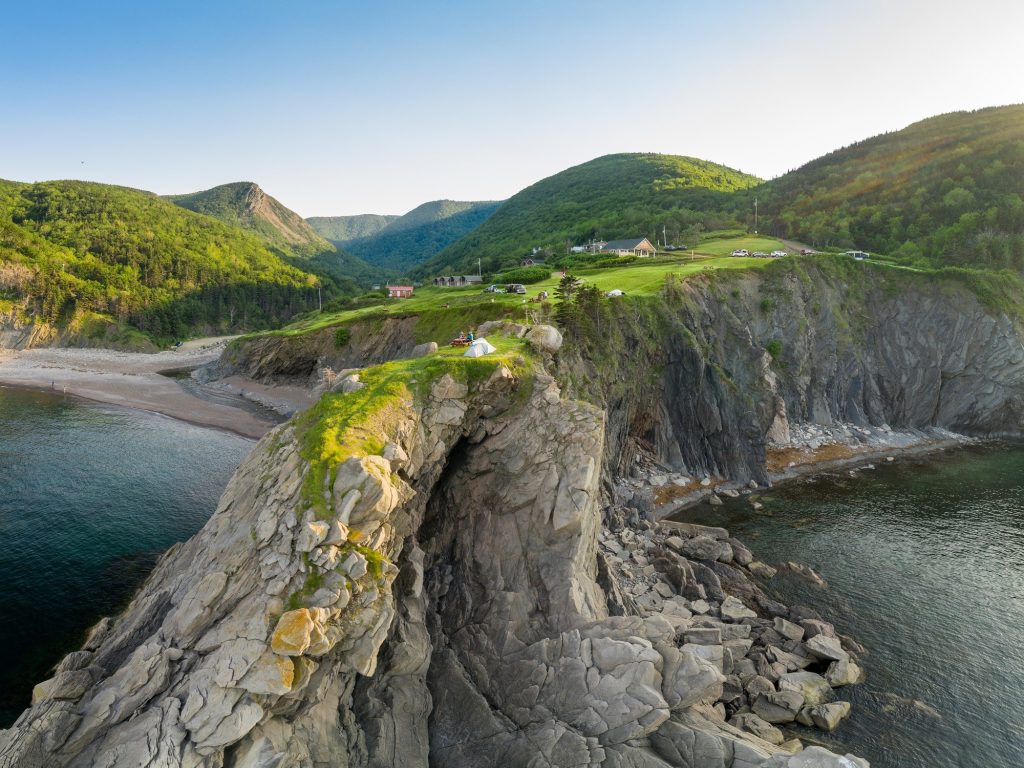
Cape Breton / Unama’ki, my own home region, and the most complex case, sits in the difficult middle. Not Mackinac’s centralisation, not yet Haida Gwaii’s recognised jurisdiction, but a layered landscape where multiple authorities are actively negotiating. The Mi’kmaw governance material is the heart of it: a genuinely plural structure of rights-holders, elected governments and the Mi’kmaq Grand Council, organised around Netukulimk, taking only what is needed, governing resources by their capacity to renew. Mi’kmaw institutions are formally involved in land-use planning and fisheries co-management now, which is real and growing. But the evidence doesn’t romanticise it: the gap between being consulted and holding shared authority is exactly where the hardest work still sits. (Cape Breton also carries a Gaelic cultural-governance layer with no equivalent in the other North American cases, which, it turns out, gives it a direct line to the Scottish material.)
Haida Gwaii
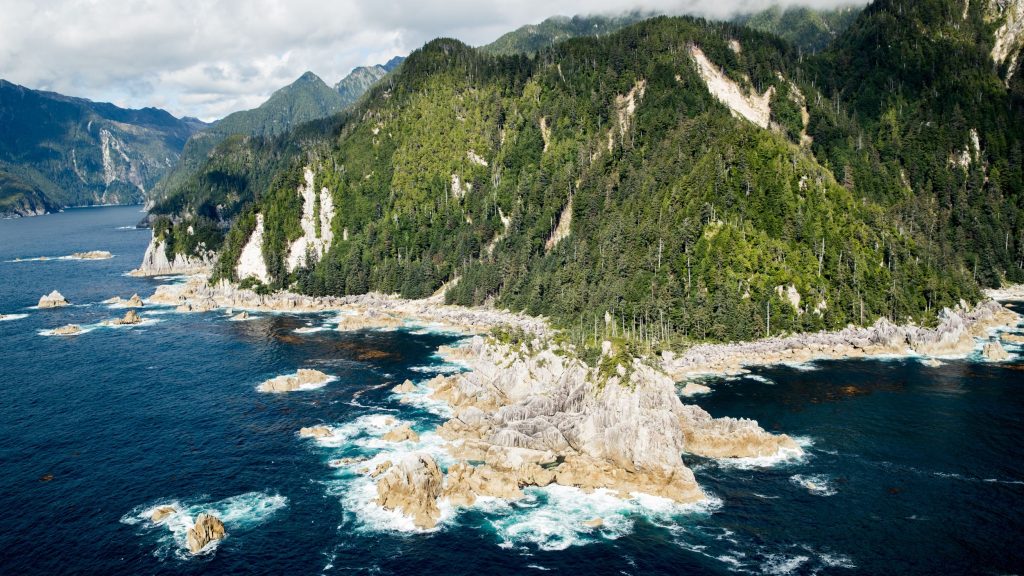
Haida Gwaii, British Columbia anchors the far end, the benchmark for what becomes possible. The Constitution of the Haida Nation asserts hereditary and Aboriginal title to the entire lands, waters and air of Haida Gwaii, and that’s not aspiration anymore: government-to-government agreements and recent federal recognition of Haida title are turning it into operating reality. Here’s the part that matters most for everyone else: recognised authority hasn’t come at the expense of the environment, it’s the vehicle for it. Ecosystem-based management is the single most common theme in the Haida evidence, and it’s exercised through Haida jurisdiction. Where conflict shows up, it’s almost always at the points where outside regulators failed to recognise inherent rights. Haida Gwaii is the proof of concept: recognise jurisdiction, and a place can become both more self-determined and more ecologically protective at once.
What ties them together
Three findings held across all five, despite wildly different histories and constitutions:
Tourism dependence is a shared vulnerability, but who absorbs the cost is a choice. Everyone leans on tourism; everyone faces seasonality and infrastructure strain. The difference is whether the community owns the terms. Where assets are community-controlled, the value stays and the risk is shared. Where authority sits elsewhere, residents eat the congestion while the profit leaves on the ferry.
Land governance shapes everything else. Who owns the land, who plans it, and whose knowledge counts in those decisions, that’s the strongest predictor of whether a community can plan for the long term. Tenure that secures collective rights, Indigenous stewardship, community ownership: these enable intergenerational responsibility in a way centralised or absentee control simply doesn’t.
Meaningful authority beats symbolic inclusion. Every time. This is the one I’d underline twice. Consultation that leaves power untouched produces very little. The transfer of real influence produces adaptation, trust and stewardship. The whole comparison turns on this distinction, and you can see it in the evidence of every single case.
So what?
If you’re working in an island or coastal region, or funding one, the practical orientation is this: treat land as a shared responsibility rather than just an asset or an attraction. Move from consultation to genuinely shared decision-making. And design governance that can learn, because the pressures aren’t holding still.
None of this is a recipe. Islands can’t import each other’s answers wholesale, that’s rather the point. But they can learn from one another, and they should. That’s why we called it Growing Our Own Answers. The communities best able to sustain themselves are the ones holding the authority to grow answers that actually fit the ground they stand on.
Read the two-page evidence brief: Below
Read the full synthesis report: Here
This research was funded by the Social Sciences and Humanities Research Council of Canada in partnership with UK Research and Innovation. Thanks to Dr. David Mallery (Scotland’s Rural College) and to the research assistants whose coding work made the synthesis possible.
Policy Brief:
