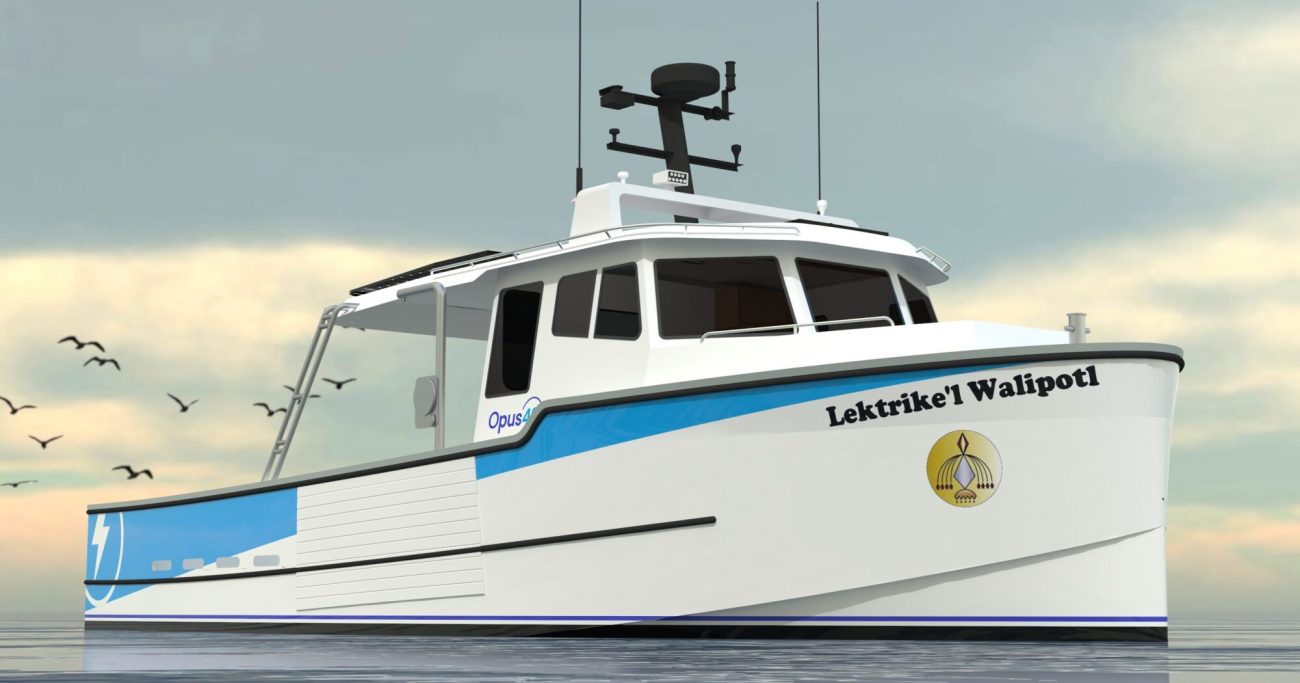
Climate Adaptation Case Study: Membertou Zero-Emission Lobster Vessel (L’Ektrikel Walipotl)
Theme: Indigenous Governance, Technological Capacity, and Decarbonizing Traditional Livelihoods
1. Initiative Overview
- Lead Organization: Membertou Development Corporation (Membertou First Nation)
- Project Title: L’Ektrikel Walipotl (The Electric Boat)
- Region: Cape Breton County (Membertou First Nation / Sydney)
- Organization Type: Indigenous Government/Economic Development Corporation
2. Context and Rationale
The lobster fishery is a cornerstone of the Mi’kmaw economy and cultural identity, yet it remains heavily reliant on fossil fuels. Traditional diesel-powered lobster boats contribute significantly to greenhouse gas emissions and are vulnerable to fluctuating fuel costs and supply chain disruptions. As part of a broader commitment to sustainability and the principle of Netukulimk (taking only what is needed for the well-being of the individual and community), Membertou First Nation identified the need to transition their fleet to zero-emission technology. This initiative addresses the urgent requirement for climate mitigation within a traditional industry while asserting Indigenous leadership in the green energy transition.
3. Detailed Adaptation Approaches
This project represents a sophisticated convergence of traditional knowledge and cutting-edge marine engineering.
- Technological Innovation: The L’Ektrikel Walipotl is a first-of-its-kind, all-electric commercial lobster boat designed specifically for the unique conditions of the North Atlantic. It uses a high-capacity battery system and electric propulsion to eliminate tailpipe emissions and significantly reduce underwater noise pollution, benefiting marine ecosystems.
- Indigenous-Led Governance: The project is not a top-down mandate but is driven by Membertou’s own economic and environmental goals. This ensures that the transition to green technology supports community sovereignty and provides long-term economic stability for Mi’kmaw fishers.
- Operational Integration: The pilot involves testing the vessel’s performance during active fishing seasons to gather data on battery range, charging infrastructure requirements, and durability in harsh marine environments. This “real-world” testing is essential for proving the viability of electric fleets to the broader Atlantic fishing industry.
4. Notable Outcomes and Impact
- Carbon Mitigation: The transition from diesel to electric power significantly reduces the carbon footprint of each fishing trip.
- Industry Leadership: Membertou has positioned itself as a national leader in marine electrification, providing a blueprint for other coastal and Indigenous communities.
- Economic Resilience: By decoupling the fishery from fossil fuel prices, the community increases its long-term economic predictability and independence.
5. Resilience Scoring Section
This scoring reflects the initiative’s role in pioneering systemic change within a critical regional industry.
| Category | Score | Rationale |
| Indigenous Governance | 5 / 5 | Centered on Mi’kmaw leadership and the principle of Netukulimk, ensuring cultural and economic alignment. |
| Technological Capacity | 5 / 5 | Pushing the boundaries of marine engineering with a first-of-its-kind zero-emission vessel. |
| Adaptive Capacity | 4 / 5 | Directly addresses the vulnerability of traditional livelihoods to climate change and fuel volatility. |
| Economic Autonomy | 4 / 5 | Strengthens community control over its primary economic driver while pioneering new green-tech jobs. |
| TOTAL SCORE | 18 / 20 | Exceptional Resilience Impact |
6. Challenges and Strategic Barriers
- Infrastructure Requirements: Wide-scale adoption requires significant investment in shore-side charging infrastructure at local wharves.
- Regulatory Frameworks: Current marine safety and inspection regulations are often designed for internal combustion engines, requiring advocacy to adapt standards for high-voltage marine batteries.
- Upfront Capital Costs: While operational costs are lower, the initial investment for electric vessels is currently higher than traditional diesel boats.
7. Educational Significance
The L’Ektrikel Walipotl serves as a powerful case study for students examining Indigenous-led technological adaptation. It demonstrates that “reconciliation” in a climate context involves moving beyond consultation to supporting Indigenous nations as they lead the development of sustainable infrastructure.
Students can engage with this project to understand:
- The Nexus of Tradition and Innovation: How “place-based” knowledge informs the design of technical solutions.
- Systemic Transition: The complexities of moving an entire industry (the fishery) toward a zero-emission future.
- Policy Advocacy: The role of community-led projects in forcing regulatory and institutional change at the provincial and federal levels.
