Thematic Module: Social Economy & Relational Governance
Module Goal: To investigate how alternative economic models and “meet-up hubs” create the social infrastructure necessary for decentralized climate adaptation.
1. Thematic Overview
This module explores the “invisible” infrastructure of climate resilience: the social and economic relationships that allow communities to self-organize. In Cape Breton, this is anchored by a strong social economy where nonprofits, cooperatives, and cultural centers act as “scaffolding”. These hubs facilitate the exchange of resources, stories, and labor, ensuring that regional adaptation is a collective process rather than a series of isolated projects.
2. Context & Rationale (The “Why”)
Climate adaptation is often treated as a technical or engineering problem, but its success depends on social trust and institutional agility. Cape Breton’s history of economic marginalization has fostered a “patchwork” of grassroots initiatives that operate outside traditional capitalist frameworks. This theme addresses the need to formalize and support this “relational governance” to ensure long-term regional durability in the face of systemic shocks.
3. Detailed Adaptation Approaches (The “How”)
- The “Meet-Up Hub” (New Dawn Centre for Social Innovation): This repurposed high school serves as a physical convergence point for artists, nonprofits, and social enterprises. It provides the “scaffolding” for collaboration, allowing decentralized groups to discover partners and share practices in a shared space.
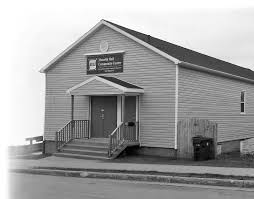
- Heritage as Resilience (Menelik Hall Heritage Conservation): By preserving historical spaces tied to the African Nova Scotian community, this initiative strengthens cultural identity and social cohesion. A strong sense of place and history is a prerequisite for community-led adaptation, as it grounds the “story” of resilience in a specific lineage of survival.
- The Maker Economy (Cape Breton Centre for Craft & Design): This center supports the “informal economy” by providing makers and artisans with the tools and networks to sustain local livelihoods. In a climate-impacted future, the ability to produce goods locally and share craft-based knowledge is a critical adaptive skill.
- Relational Mobility (Community Transit Victoria County): Unlike rigid urban transit, this model relies on community-led dispatch and relational networks to move people in rural areas, demonstrating how social trust can solve logistical gaps.
4. Notable Outcomes & Impact
- Infrastructure Re-Use: The New Dawn Centre has successfully turned “dead” institutional space into a “living” laboratory for social innovation and climate storytelling.
- Cultural Preservation: Heritage projects like Menelik Hall have ensured that marginalized voices are central to the regional narrative of adaptation and resilience.
- Distributed Capacity: The “maker” and “social” networks created through these hubs have allowed for a more rapid mobilization of community resources during emergencies.
6. Challenges & Strategic Barriers
- Sustainable Funding: Social economy initiatives often struggle to fit into traditional grant cycles that prioritize “bricks and mortar” over “relationships and trust”.
- Measuring “Relational” Impact: It is difficult to quantify the value of a “meet-up hub,” making it harder to justify investment to skeptical external stakeholders.
- Burnout in the “Patchwork”: Because these systems rely heavily on community leaders and volunteers, they are vulnerable to the physical and emotional toll of constant crisis management.
7. Educational Significance for the Summer Institute
This module is the heart of the “Scaffolding without Steering” philosophy. Key learning points include:
- The Architecture of Convergence: Studying how physical spaces (hubs) can be designed to facilitate “planned serendipity” between different adaptation sectors.
- Identity-Based Resilience: Analyzing why cultural heritage and craft are not “extras” but essential tools for maintaining social order during environmental shifts.
- Relational Power: Understanding how power operates in decentralized systems—moving from “power over” (steering) to “power with” (scaffolding).
