Last week, members of the Homeward Bound team attended the CEPI gathering, “Listening to the People of the Lakes.” While our daily work focuses on the mechanics of healthcare and housing for older adults in Nova Scotia’s Eastern Health Zone, this session was a vital reminder that “aging in place” cannot be separated from the “place” itself.
Care as a Shared Ecosystem
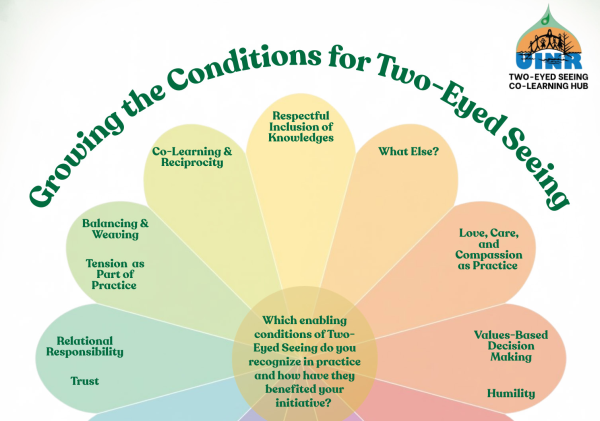
The heart of the gathering was Etuaptmumk (Two-Eyed Seeing). For Homeward Bound, this means acknowledging that while Western clinical data tells us what services are missing, Indigenous wisdom tells us why the connection to the land is a clinical necessity for wellbeing. To care for an elder in Unama’ki is to care for their access to the water, the air, and the community that sustains them.
The Rights of the Lakes and the Rights of the Person
One of the most profound discussions centered on the legal and spiritual Rights of Nature. There is a clear parallel here to our research: just as Pi’tupaq has an inherent right to be protected from degradation, our older adults have an inherent right to age within their own social and ecological ecosystems. Noted at the event was that water is the “blood that runs through all of Cape Breton.” If the environment is toxic or inaccessible, aging in place becomes a hardship rather than a comfort.
Intergenerational Knowledge
Our elders are not just recipients of care; they are the primary knowledge holders of the Bras d’Or’s history. During the three days of dialogue, it became clear that the sustainability of the Lakes depends on the stories and observations held by the oldest members of our community. Their insights into the changing landscape are the very materials we need to build a more resilient, climate-adapted healthcare model.
Moving forward, my work within Homeward Bound will continue to work through this lens, recognizing that the wellbeing of our seniors is inextricably tied to the health of the land and the seven generations that will follow.
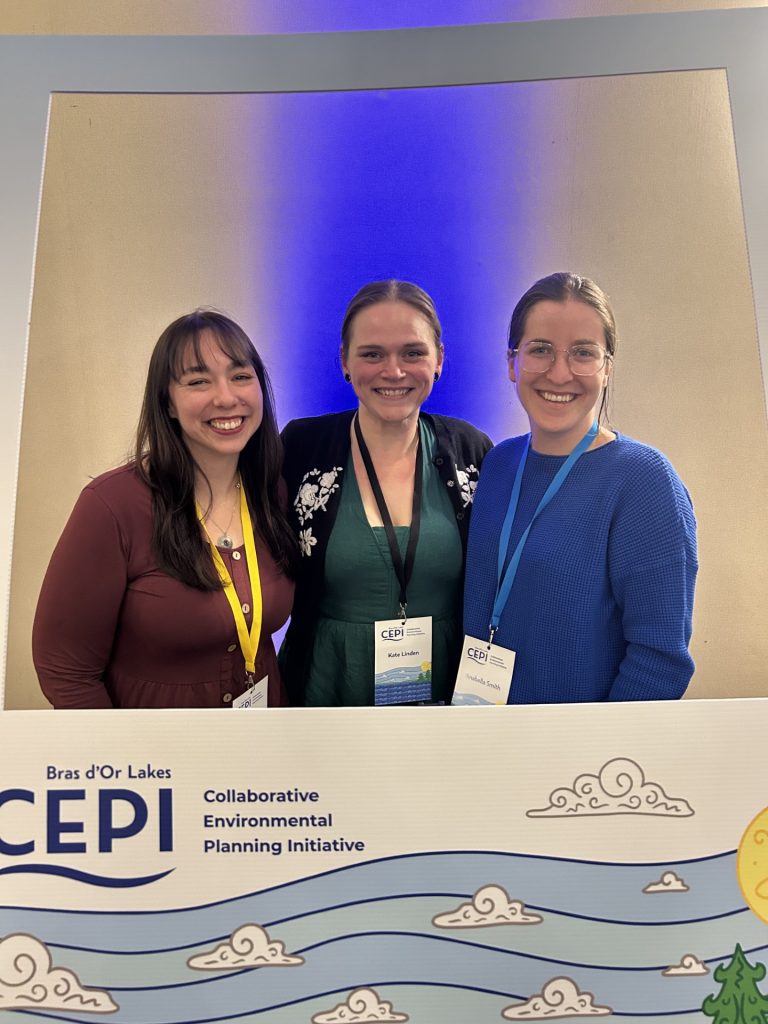
(Image from left to right: Brooke Collicut – HB research coordinator, me in the middle! and Anabella Smith – HB project manager)
Beyond Services: Water as a Legal Person
This reflection carries particular weight as we prepare for the upcoming CANSEE conference. From the perspective of Ecological Economics, the Bras d’Or Lakes are not merely a backdrop for human activity or a service provider for recreation; they are a vital participant in our shared economy of care. The movement toward granting legal personhood to Pi’tupaq mirrors our own research goals in Homeward Bound: both seek to shift the paradigm from management to relationship. Just as we argue that older adults deserve a healthcare system that recognizes their inherent dignity rather than their economic utility, the Lakes demand a legal framework that recognizes their right to flourish. If we are to build a truly climate-resilient Eastern Health Zone, our models must account for the fact that the health of the person and the health of the water are a single, nested system.
