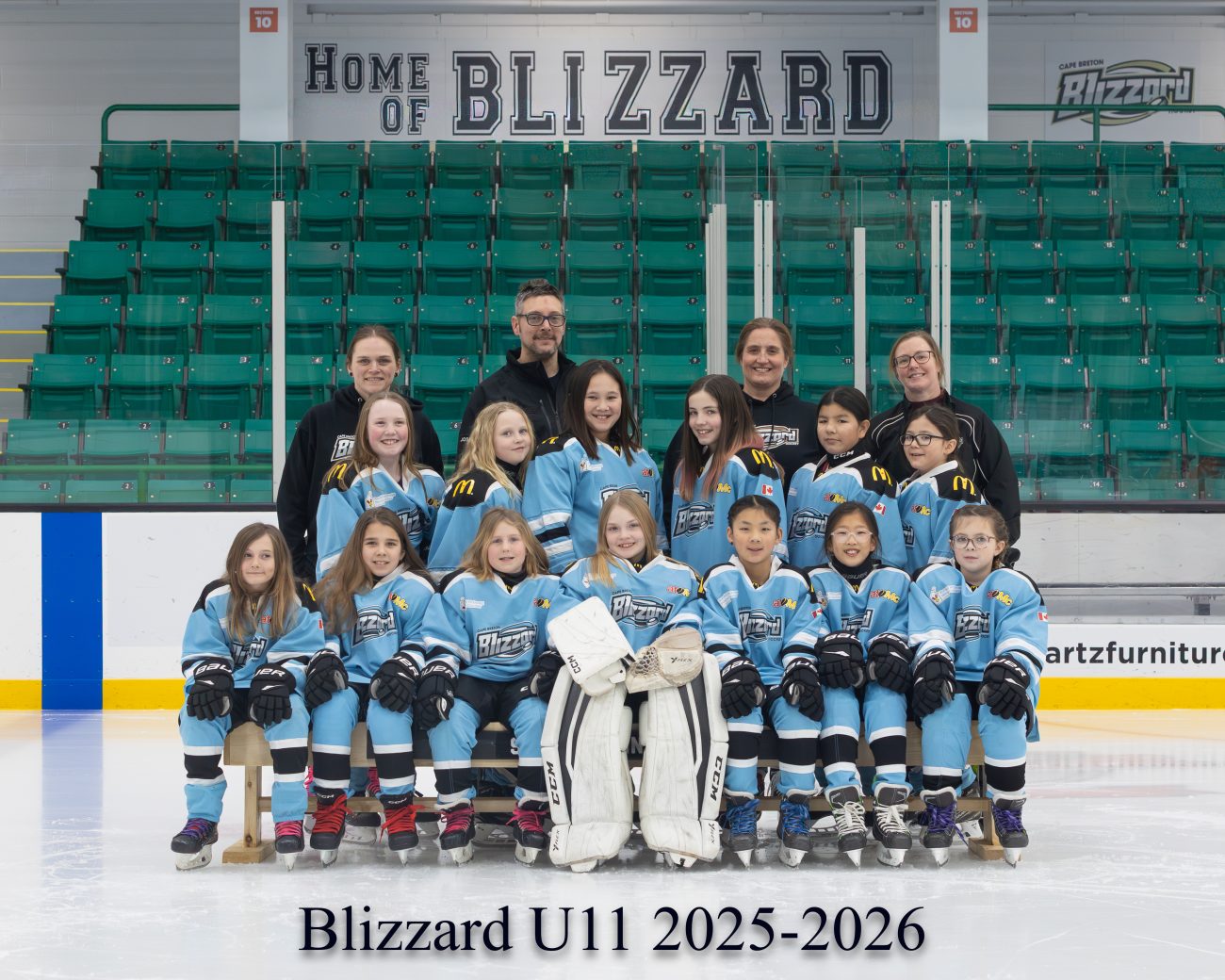
Image: Me and the U11 Blizzards’ team I coached in 2025-26
If you spend all your time defending your ego, you become rigid. And on the ice, rigidity is exactly what makes you fall the hardest.
In my day job, I map out long, complex research trajectories, navigate the internal politics of academia, and help MBA students deconstruct the complexities of community economic development. My life is lived primarily from the neck up, in a world of strategic foresight, carefully chosen words, and theoretical frameworks.
But on Monday nights, I am a student again! I’ve been doing a ten-week mother-and-daughter hockey session with the Blizzards, and it has been an excellent exercise in leadership and learning about my body’s ability to perceive its own position in space.
There is a specific kind of radical humility that comes from being bad at something in public.
When you are learning to find your skate edges, you are forced to be entirely present in your own skin. You cannot intellectualize a tight turn or a sudden stop. You have to feel the friction, the weight distribution, and, inevitably, the cold shock of the ice when you lose your balance.
For someone whose career is built on having a plan, the act of falling is a much-needed recalibration of my brain. It reminds me that growth doesn’t happen in a state of perfect and highly curated instances. It happens in the wobble before the fall. You learn the most right before you take that tumble. It happens when you are willing to look a little ridiculous in front of your daughter and a dozen other families.
This is a systems “Edge of Chaos” in a very literal, physical sense. To get better, you have to lean into the instability. You have to trust the process of failing until the new movement becomes muscle memory.
The ice also doesn’t care about your credentials, and neither do the other moms. We are all just a collection of bodies in motion, laughing at our own lack of grace. There is joy in that kind of humility. These tactile realities of feeling the cold, breathing heavy, falling down… these ground me in what really matters. That is, the shared experience of a community that shows up simply to try.
When I’m on ice with my daughter, Nora, we are navigating a whole new kind of dance together that isn’t based on any milestone or authority. It’s about the look on her face when either of us nails a new move and the shared realization that we are both allowed to be imperfect and that trying together will make us better.
I love these moments where the weight of any kind of expert identity evaporates. I realize in these moments that being a good mom, or even a halfway decent leader, isn’t about maintaining any kind of flawless face. It’s about how I occupy space when the stakes are low, and the connection has the possibility to be real. It’s about stepping out of roles and being able to wobble and be unstable together.
We all need the humility to adjust when we feel ourselves losing our edge and starting to wobble.
If you spend all your time defending your ego, you become rigid. And on the ice, rigidity is exactly what makes you fall the hardest.
So, I’m leaning into the wobble…. I’m learning that the most important skill I can bring back to my research, my students, and research teams isn’t my expertise… It’s my willingness to learn and wobble. It’s the realization that we are all just trying to find our footing in a complex, slippery world, and the best thing we can do is help each other back up when the ice wins.
