Thematic Module: Indigenous Governance & Land-Based Knowledge
Module Goal: To examine how Mi’kmaw leadership and the principle of Etuaptmumk (Two-Eyed Seeing) transform climate adaptation from a technical challenge into a relational practice.
1. Thematic Overview
This module highlights the leadership of the five Mi’kmaw communities in Unama’ki (Cape Breton) as they pioneer adaptation strategies rooted in Netukulimk, the use of the natural bounty provided by the Creator for the self-support and well-being of the individual and the community at large. By integrating projects across transportation, housing, waste management, and education, this theme demonstrates how Indigenous governance asserts sovereignty while building regional climate resilience.
2. Context & Rationale (The “Why”)
For Mi’kmaw communities, climate adaptation is inseparable from the ongoing process of reconciliation and the assertion of treaty rights. Traditional Western approaches to adaptation often overlook the spiritual and relational connections to the land and water. This initiative responds to the need for “scaffolding” that supports Indigenous-led innovation, allowing communities to manage their own resources and infrastructure in a way that honors both traditional knowledge and modern science.
3. Detailed Adaptation Approaches (The “How”)
- Technological Sovereignty (Membertou): The L’Ektrikel Walipotl (Electric Boat) project decarbonizes the lobster fishery, ensuring that a primary economic driver remains sustainable and decoupled from fossil fuel volatility.
- Relational Infrastructure (Wagmatcook): The Elder’s Housing project uses high-efficiency design and community-approved eligibility guidelines to ensure that respected knowledge keepers are protected from energy poverty and extreme weather.
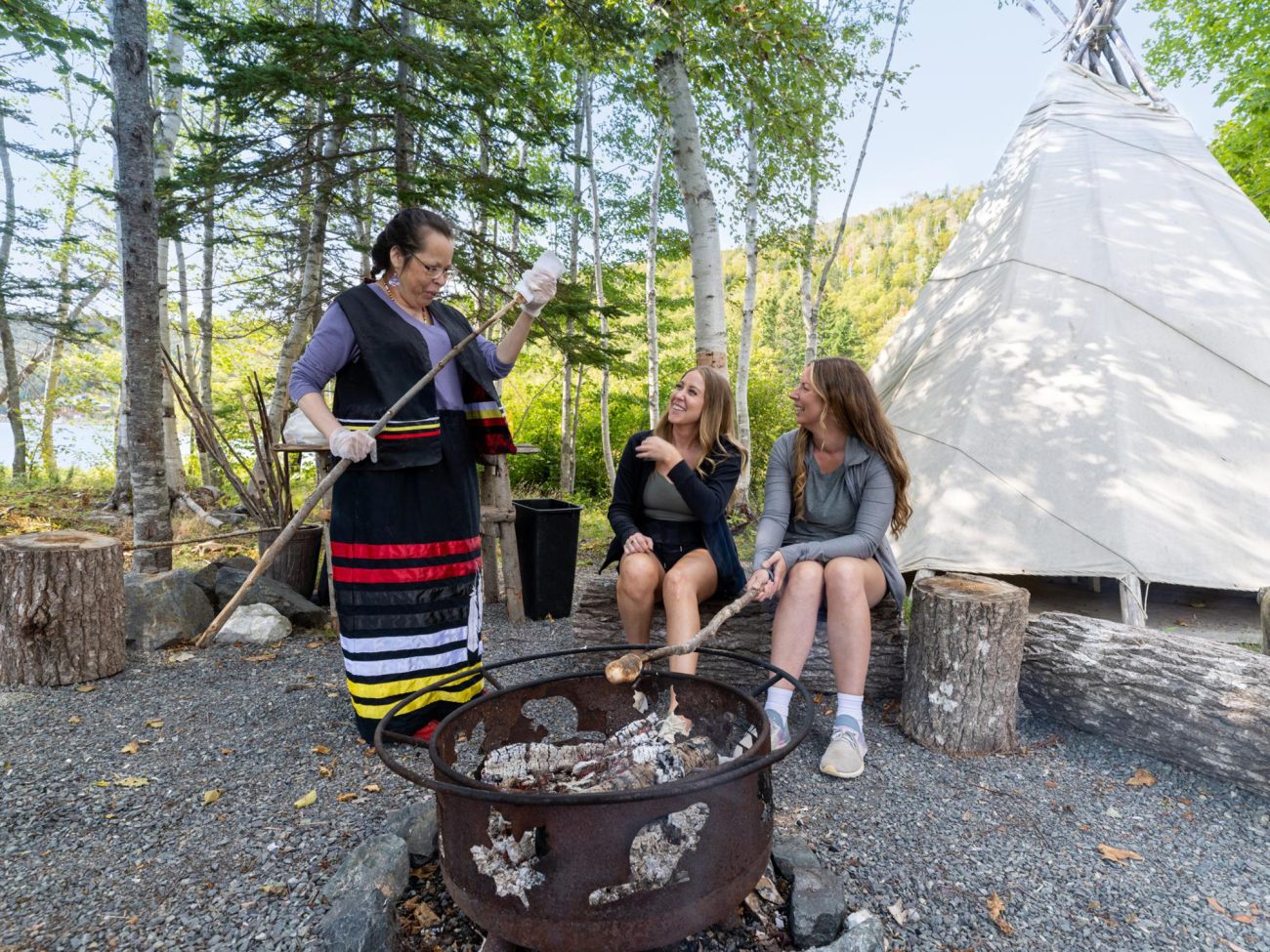
- Pedagogical Adaptation (Eskasoni): Eskasoni Cultural Journeys uses land-based storytelling and tourism as a mechanism for climate education, preserving traditional ecological knowledge (TEK) for future generations.
- Waste & Resource Management (We’koqma’q): The community’s waste initiative focuses on diversion and local management, reducing the carbon footprint of transport while reclaiming materials for community use.
- Regional Stewardship (UINR): The Unama’ki Institute of Natural Resources (UINR) provides the technical and scientific support for these projects, acting as a regional hub for “Two-Eyed Seeing” in resource management.
4. Notable Outcomes & Impact
- Pioneering Marine Electrification: Membertou’s electric vessel pilot is a first-of-its-kind in the North Atlantic, providing a scalable model for the entire Atlantic fishing industry.
- Formalized Governance Policies: Wagmatcook’s development of the Elders Complex Eligibility Guideline provides a durable blueprint for equitable resource distribution within Indigenous communities.
- Cultural Revitalization: Eskasoni’s land-based programs have successfully turned climate “education” into an immersive cultural experience that supports local livelihoods.
6. Challenges & Strategic Barriers
- Regulatory Misalignment: Provincial and federal safety standards for marine vessels and housing often do not account for Indigenous-led innovation or specific community needs.
- Capital Intensity: High-performance infrastructure like electric boats and net-zero housing require significant upfront investment that exceeds typical municipal funding models.
- Capacity Strains: The decentralized nature of these projects puts pressure on community leaders and RAs who manage multiple interconnected initiatives simultaneously.
7. Educational Significance for the Summer Institute
This module provides a laboratory for students to study “Relational Governance in Practice.” It invites them to analyze:
- Two-Eyed Seeing: How to integrate TEK with Western engineering to solve modern climate problems.
- Sovereignty as Resilience: Why community-led initiatives are more durable than top-down government programs.
- Intergenerational Equity: The vital role of Elders and youth in co-designing the future of Unama’ki.
