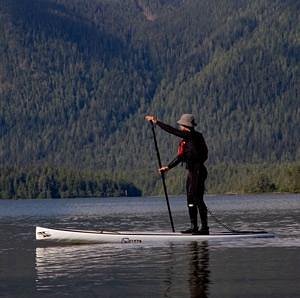
A brief of Feng Wang’s ARP project and paper.
Research Focus: A study on the potential for Mi’kmaq-led ecotourism to bridge the gap between environmental conservation and economic development on Cape Breton Island.
Executive briefs are snapshots of a research project completed by one of my students. You can see the full list of projects here.
The Opportunity
Cape Breton Island (Unama’ki) possesses world-class natural landscapes and a vibrant Mi’kmaq heritage, yet Indigenous-led ecotourism remains underdeveloped compared to regions like British Columbia. The research suggests that by integrating traditional ecological wisdom with modern tourism, the island can create a resilient, sustainable industry.
Strategic Frameworks
The project utilizes several Community Economic Development (CED) theories to ensure long-term sustainability:
- Doughnut Economics: Balancing the “social foundation” of community needs (income, education) with the “ecological ceiling” (climate health, biodiversity).
- Two-Eyed Seeing: A guiding approach by Mi’kmaq Elder Albert Marshall that weaves together Indigenous knowledge and Western scientific perspectives.
- Asset-Based Community Development (ABCD): Focusing on internal community strengths—such as oral histories and local talents—rather than relying solely on external investment.
Lessons from the West Coast: T’ashii Paddle School
The research highlights the T’ashii Paddle School on Vancouver Island as a model for Cape Breton. Key transferable success factors include:
- Indigenous Employment: Hiring local Indigenous guides and instructors to ensure cultural authenticity.
- Environmental Stewardship: Using low-impact activities (canoeing, paddleboarding) to minimize the footprint on the land.
- Strategic Partnerships: Collaborating with Parks Canada and national Indigenous tourism associations to secure funding and market visibility.
Future Recommendations
To realize the potential of Indigenous ecotourism, Chelsea proposes a collaborative effort across four sectors:
- Indigenous Communities: Establish a Mi’kmaq Ecotourism Advisory Council to lead decision-making and protect cultural authenticity.
- Government Agencies: Provide dedicated funding (e.g., through the Indigenous Tourism Fund) and fix regional infrastructure gaps like road signage and airport capacity.
- Tourism Organizations: Partner with Mi’kmaq communities to create professional marketing strategies and expand national/international visibility.
- Educational Institutions: (CBU & NSCC) Develop specialized Indigenous Ecotourism training programs to build local business and hospitality skills.
