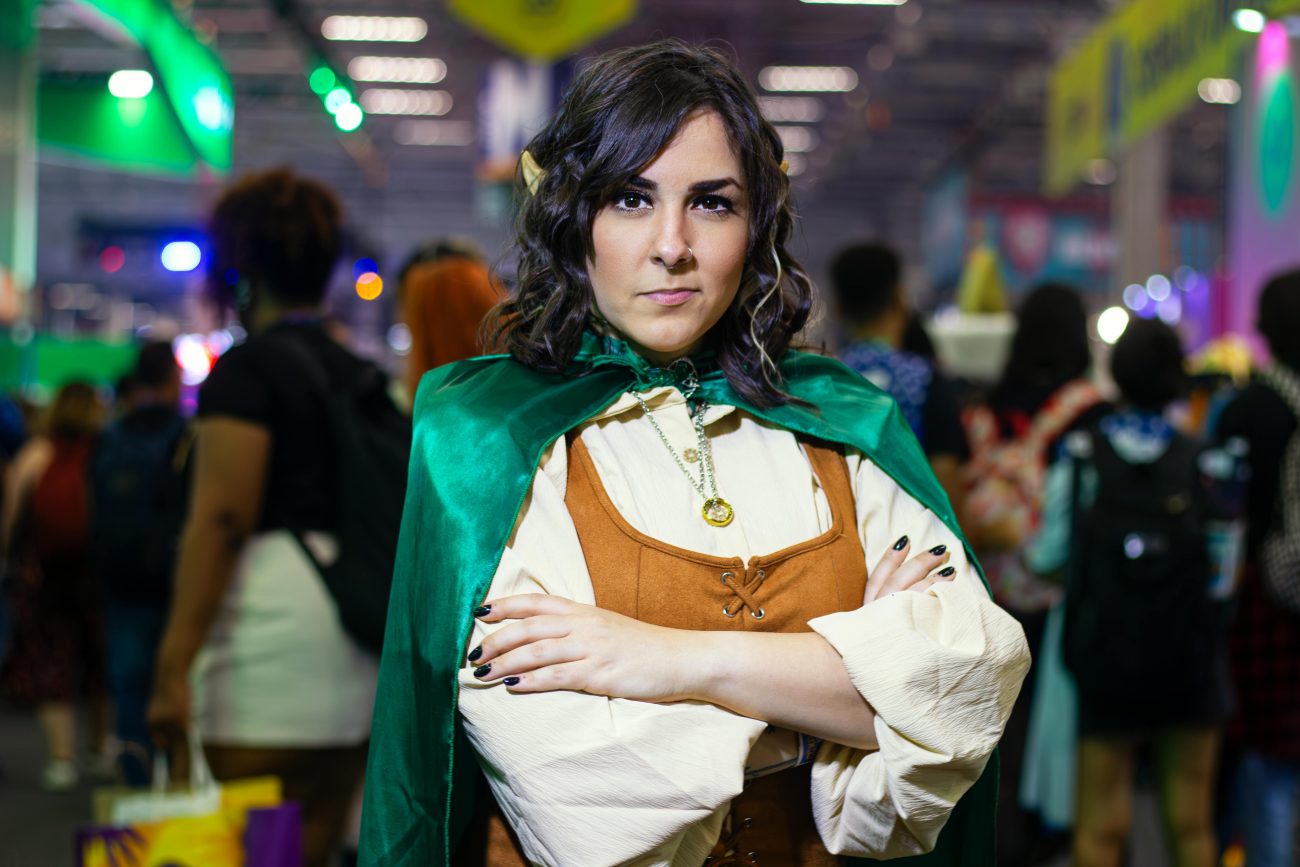
Photo by Danilo Duarte Fotografia from Pexels
Last year, I ran a D&D campaign for a group of teen girls. Going in, some were very quiet and hesitant to take up space or make wrong moves. There was constant apologizing for taking too long or accidentally doing the wrong thing. By the end of our run, the transformation was clear and very awesome to see. Their characters had turned into practiced versions of themselves that were bold, decisive, and collaborative. Their parents noticed it too, reporting a dramatic improvement in their confidence and their ability to navigate complex social dynamics.
At the time, this was a bit of a happy accident, I was just doing it to have fun and as a favour to a friend. But the more I thought about it, the more it really is a natural outcome of how tabletop role-playing games (TTRPGs) function.
The Vanishing Third Space
I’ve been quite preoccupied lately with the concept of Third Spaces and their role in community economic development, aging in place, climate adaptation, and just general as central nodes within complex social webs. Sociologist Ray Oldenburg famously defined the Third Space as a place that is not home (the first space) and not school or work (the second space). These are the anchors of community life where people gather voluntarily to build social capital. For today’s youth, especially those in rural areas like Cape Breton or those navigating the isolated world of homeschooling, third spaces are becoming more difficult to find.
When the local rink or the mall isn’t accessible, D&D has the potential to fill the void. It provides a non-monetized, safe-to-fail environment where the stakes are imaginary but the personal growth is real.
Developing the Technical and the Tactical
D&D is often overlooked as a niche interest. Something someone may have heard of in passing, but something in a realm that makes some people uncomfortable. People often don’t think about the technical complexity involved in a D&D session (except for, perhaps, D&D players themselves). A player is doing more than just pretending, they are also managing a multi-variable system and developing skills that will make them a more adaptable, resilient, empathetic, and systems-oriented decision-maker and citizen. We can consider a few points here, but I want to pull out systems literacy, social intelligence, and poximal development.
- Systems Literacy: In a single combat encounter, a player is simultaneously managing a limited pool of resources (spell slots, hit points, or rare items) while calculating the probability of a successful outcome. They learn a rule book, but are also learning to operate within a Complex Adaptive System. The best players have to account for how their individual choices ripple through the rest of the party’s actions. This is technical fluency in a very engaging form. It is the ability to look at a chaotic set of variables and find a strategic path forward that is based on logic, chance, and empathy. This is a difficult skill for folks to get a handle on, and are skills that translates directly to the way we analyze economic or ecological systems and problems in the real world.
- Social Intelligence: The social dynamics of a D&D session are an incredible lesson in high-level negotiation and collective problem-solving. Because the game is fundamentally collaborative, a player cannot win at the expense of the rest of the group. They are constantly practicing empathy by viewing the world through the lens of a different identity, while simultaneously navigating the real-world personalities around the table and how their choices will impact all of them. This requires a high level of social capital building. Whether they are mediating a dispute between two hot-headed characters or convincing a skeptical town guard to let the party pass, they are rehearsing the relations required for any successful community-based conversation, disagreement, or collaboration.
- The Zone of Proximal Development: At the table, a shy teenager can lead a diplomatic mission or manage a crisis, practicing a level of authority they haven’t yet been granted in the real world. This is what Lev Vygotsky called the Zone of Proximal Development: a space where play allows a person to perform a head above their current self. Vygotsky argued that in play, a person always behaves beyond their average age and above their daily behaviour. At the table, the social hierarchies of high school or the limitations of a rural upbringing fall away. The shy teenager who might struggle to speak up in a classroom can, for four hours, occupy the role of a seasoned diplomat or a decisive military commander. They are not just pretending to have authority; they are experiencing the neurological and emotional reality of exercising it. This rehearsal of the self creates a permanent bridge, allowing that newfound confidence to translate from the playing table into their actual lives. This is helping to build community leaders.
Future Research
The success of the group of teen girls sparked a research interest for me. I want to further understand this play-based agency and demonstrate its power as a community economic development tool. I’m interested in how TTRPGs can build local social infrastructure in Cape Breton and how digital tabletops serve as a primary community space for homeschooled or online-based youth. Specifically, I’m interested in two distinct but overlapping groups:
- Rural Youth in Cape Breton: How can we use TTRPGs to build local social infrastructure and combat the isolation of small-town life?
- The Digital Commons: For homeschooled or online-based youth, how do digital tabletops serve as a primary community space? Can these online environments produce the same quality of social capital as a physical table?
While this is partly about teaching kids how to play a fun game, it is also about recognizing that imagination and play are a form of social infrastructure. When we give youth a world they can actually influence, they don’t just become better players in D&D, they also become more capable citizens (I think).
I’m currently in the early stages of designing a study to track these outcomes more formally. If we want to solve the loneliness epidemic and the confidence gap, character sheets may be an interesting place to start.
Imagination as a Public Good
As a sort of side/end note… We need to stop viewing imagination as a private luxury or a childhood phase. In a society facing a loneliness epidemic and a crisis of civic participation, imagination is a public good.
In economic terms, we often treat the commons as physical things: air, water, or shared land. But there is are several social commons that precedes the physical, such as the imaginative commons. Before we can reclaim a park or launch a co-op, we must first have the collective capacity to envision a reality that does not yet exist (an adjacent possible…I will always make a Stuart Kauffman link when given the chance). When we relegate imagination to the realm of private luxury or childhood play, we are effectively privatizing the future. We are conceding that the way our towns, economies, and care systems are currently organized is the only way they can be organized.
If we cannot imagine a different way of living together, we are trapped in the scripts written for us by corporate interests and distant bureaucracies. This is the ultimate form of enclosure: the fencing off of the mind.
When youth sit down to play D&D, they are doing something far more radical than escaping reality. They are building the cognitive and emotional infrastructure required to change it. Every time a party negotiates with a fictional king or organizes a village defence, they are learning a foundational truth: systems are not natural laws. They are learning that social constructs can be negotiated, challenged, and rewritten through collective effort. They learn that if a rule is unfair, you don’t just complain; you work with your peers to propose an alternative. This is the difference between being a passive consumer of a world and being an active producer of one.
Imagination is the specific faculty that allows us to see beyond the immediate material reality. To underinvest in imaginative spaces, to see them as “just games”, is to underinvest in the future of our democracy and creative futures.
