Community Readiness and Prosocial Responses to Severe Weather in Cape Breton
Project Overview
As climate change intensifies, rural and island communities like Cape Breton face unique risks from extreme weather, ranging from coastal erosion to record-breaking snowstorms. This project investigates how our residents perceive, prepare for, and respond to these events. By centering lived experiences, we explore the vital relationship between social cohesion, informal support networks, and long-term adaptive capacity.
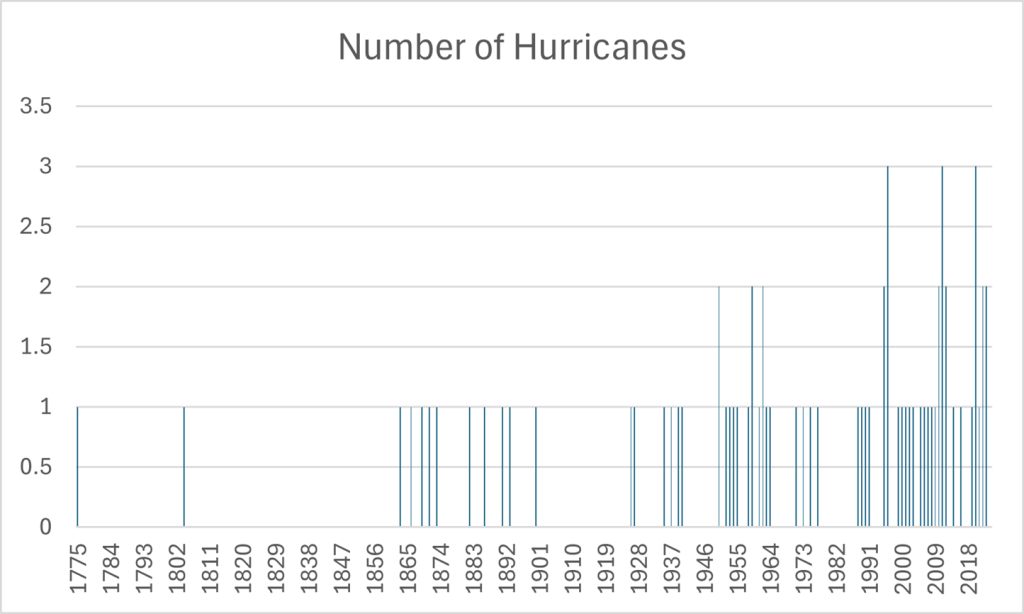
Number of hurricanes in Cape Breton – pattern shows number increasing over time.
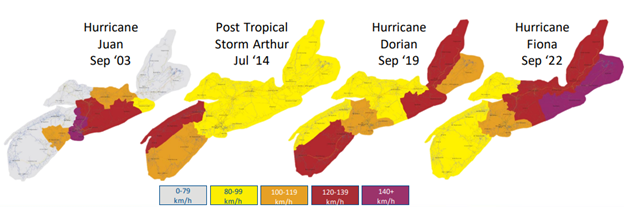
Increasing severity of hurricanes in Cape Breton – pattern shows the wind speed increasing over time (Source: Nova Scotia Power).
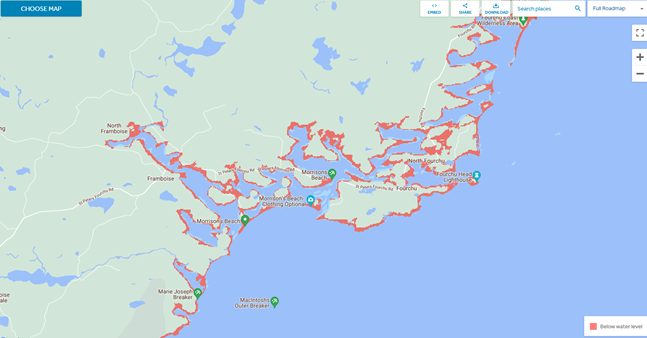
What 2m of sea rise would look like on the South Shore of Cape Breton.
The History: Learning from the 2024 Snowstorm
The catalyst for much of this research was the February 2024 snowstorm, where over 150 cm of snow fell in less than five days. Through a mixed-methods study involving 349 residents and interviews with local stakeholders, we analyzed real-time responses to a declared state of emergency.
Key findings included:
- The Power of Prosocial Behaviour: Spontaneous acts of help—checking on neighbours and clearing driveways—significantly increased residents’ sense of community belonging.
- Residency and Readiness: Long-term residents (10+ years) were significantly more likely to engage in advanced preparedness behaviours compared to newcomers.
- Systemic Gaps: Despite high individual preparedness, many residents remained stranded for over 24 hours, highlighting a disconnect between household efforts and institutional infrastructure.
Funding & Collaboration
This research was supported by Cape Breton University and the Social Sciences and Humanities Council of Canada. and conducted in collaboration with local municipal staff, emergency planners, and non-profit leaders. Our work triangulates quantitative survey data with qualitative insights to ensure a holistic view of island resilience.
Future Plans: Toward Equity-Based Adaptation
Building on this data, our future work focuses on shifting from reactive, “boom and bust” disaster funding toward sustained, integrated planning.
Our upcoming priorities include:
- Advocating for Decentralized Comfort Centres: Supporting community-operated hubs in rural and coastal areas to provide immediate warmth and power during outages.
- Centering Equity: Prioritizing infrastructure upgrades and communication strategies for Mi’kmaw communities, seniors, and low-income renters who face disproportionate risks.
- Neighborhood Response Teams: Exploring how to formalize the “unofficial systems” of care that already serve as our island’s first line of defense.
